Loss Mitigation: The NY State Court Process

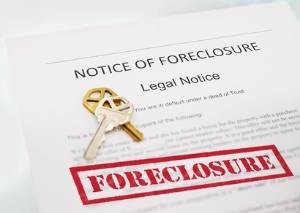
Prior to 2008, a New York foreclosure would be completed in a year or less. While Loss Mitigation existed, it was not a formal process as it is today, it's something that Servicers did throughout the foreclosure process. This process, known as “Dual Tracking”, was intended to avoid delays in the foreclosure process should the Loss Mitigation efforts fail, but is now prohibited by the Dodd–Frank Wall Street Reform and Consumer Protection Act. Read about it by clicking into our previous article.

By |2020-03-31T20:45:03-04:00June 22nd, 2015|Debt Collection, Real Estate|Comments Off on Loss Mitigation: The NY State Court Process

Enforcement of Due on Sale Clause & Due-On-Encumbrance Clause

Due-on-Sale Clause

The Due-on-Sale clause contained in most mortgages provides that if the property secured by the mortgage is sold to a third party without the lender's consent, the lender has the right to demand full payment of the loan. Lenders require this so that any prospective purchaser will feel compelled to submit a complete application to them, in order to avoid the risk of a foreclosure based upon the default of failing to obtain the lender’s consent. The application will contain the purchaser’s employment, income and all other information the lender would obtain if the purchaser was applying for a new loan. If the bank is satisfied with the creditworthiness of the purchaser, they will consent to the sale. 

By |2023-05-25T05:41:07-04:00June 1st, 2015|Debt Collection, Real Estate|Comments Off on Enforcement of Due on Sale Clause & Due-On-Encumbrance Clause

Updates to NY’s Pre-Foreclosure Requirements

Failure to strictly comply with two of New York’s recently enacted consumer protection statutes affecting residential foreclosures, RPAPL 1304 and RPAPL 1306, which require a 90-day notice to be sent to the borrower, and specific information contained therein to be filed with the New York State Department of Finance within three days thereafter, have recently been reviewed and interpreted by the New York courts. 

By |2020-08-29T15:14:47-04:00May 8th, 2015|Debt Collection, Real Estate|Comments Off on Updates to NY’s Pre-Foreclosure Requirements

Loss Mitigation Prohibitions – It Ain’t Just Loan Mods

Many loan servicers are under the misimpression that the prohibition against dual tracking only applies to loan modifications. This is incorrect; it also applies to forbearance agreements, deeds in lieu of foreclosures and short sales.

By |2020-03-31T20:45:54-04:00March 27th, 2015|Debt Collection, Real Estate|Comments Off on Loss Mitigation Prohibitions – It Ain’t Just Loan Mods

Debt Collection Consumer Protection: It’s not just FDCPA!

My previous article on Debt Collection Consumer Protection described the protections afforded by the Fair Debt Collection Practices Act. There are also numerous other federal, state and local laws which provide additional protections for consumers.

By |2020-03-31T20:47:34-04:00February 25th, 2015|Debt Collection|Comments Off on Debt Collection Consumer Protection: It’s not just FDCPA!

Fair Debt Collection Practices Act: Debt Collector Rules & Regulations

The Fair Debt Collection Practices Act (FDCPA), codified in 15 USC, section 1692, is a federal statute which was enacted to protect consumers from abusive, unfair or deceptive practices by debt collectors.

By |2023-05-25T05:45:00-04:00January 14th, 2015|Debt Collection|Comments Off on Fair Debt Collection Practices Act: Debt Collector Rules & Regulations

Judgment Enforcement: What’s in your debtor’s wallet?

Many litigation attorneys are very good at what they do - winning cases and obtaining judgments. But once they obtain a judgment, their clients are not always voluntarily paid what they have been awarded, and the judgment must be enforced. In order to do so, the debtor’s assets must first be located so enforcement proceedings can commence.

By |2020-07-27T13:25:10-04:00August 19th, 2014|Debt Collection|Comments Off on Judgment Enforcement: What’s in your debtor’s wallet?

Strict Foreclosure: The Second Bite of The Apple

When a mortgage is foreclosed, not only are the rights of the owners of the property extinguished, but all rights of third parties who have subordinate liens or other interests are extinguished, as well as the property, which will be sold at the foreclosure sale “free and clear” of any such interests.

By |2020-07-27T13:25:50-04:00August 5th, 2014|Debt Collection, Real Estate|Comments Off on Strict Foreclosure: The Second Bite of The Apple

What’s a Collection Attorney and What Do Litigation Attorneys Do

In order to effectively utilize the courts to collect a debt owed, a creditor must understand the difference between litigation attorneys and collection attorneys.

By |2020-08-29T15:19:39-04:00March 11th, 2014|Debt Collection|Comments Off on What’s a Collection Attorney and What Do Litigation Attorneys Do
Go to Top